“Talk saves lives”: Rob Adams on the raw emotional heart of Tabitha Unleashed
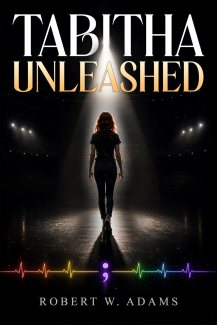
What happens when a girl blessed—and burdened—with extraordinary abilities discovers that her hardest battles aren’t fought against supervillains, but against depression, shame, and the quiet ache of wanting to disappear?
In Tabitha Unleashed, author Rob Adams weaves high-stakes speculative drama with raw, tender humanity. Driven by the fierce bond between twin sisters, the story follows Tabitha into the blinding glare of a national stage as she risks everything to save her dying sister—while struggling to believe that her own life is worth saving at all.
I had the pleasure of sitting down with Rob to talk about the inspiration behind Tabitha’s powers, writing authentic mental health journeys, the emotional weight of sisterhood, and why the bravest power of all is simply reaching out for help.
Here is our conversation.
CDF: What inspired you to write Tabitha Unleashed?
RA: The title popped into my head one day: Tabitha Unleashed. It was simply a story about a girl with hidden powers. Her family knew, but her mom wanted her to keep hiding. Then her mom is killed by criminals, and with her dying breath, she says, “Unleash it, baby.”
That was the whole story concept.
Then I saw Jane Marczewski, better known as Nightbirde, perform on America’s Got Talent while battling cancer. That changed everything. Tabitha Unleashed morphed into a story about a girl hiding her extraordinary powers on a national stage to save her twin sister, who is dying from cancer.
Then my daughter came out, and the story changed again. What began as a girl with superpowers became something much more personal—an emotional story about identity, acceptance, and survival.
CDF: Tabitha has extraordinary powers, but her biggest battles are deeply human. Was that intentional?
RA: Absolutely. After my daughter came out, I started learning about the mental health challenges facing LGBTQ+ teens, particularly the disproportionately high rates of depression and suicide attempts.
One of my favorite books is My Heart and Other Black Holes, so incorporating those themes into Tabitha’s journey felt like a natural progression.
Her powers might make her extraordinary, but they don’t protect her from trauma, depression, or the fear of being rejected. In many ways, they make those struggles even harder.
CDF: Mental health and suicide are central to Tabitha’s journey. How did you approach writing about such sensitive subjects?
RA: Lots of research, including reading personal stories from teens experiencing those challenges and learning how therapists approach their patients.
It was intentional to have Tabby in therapy even though she possesses extraordinary powers. My hope was that teens reading those scenes would recognize that even someone as powerful as Tabitha needs support from mental health professionals.
Those scenes had to feel authentic.
I also had numerous critique partners and developmental editors weigh in. One of my critique partners was a former therapist, and when she gave her blessing to the doctor-patient interactions, I was on a total high for a month.
Those scenes are some of my favorites in the book.
CDF: The relationship between Tabitha and her twin sister Kayla drives much of the novel. Why was that relationship so important?
RA: I didn’t know it at the time, but Kayla became the emotional anchor of Tabitha’s journey. She’s hopeful, resilient, witty, and Tabby’s true believer.
The story begins shortly after Tabby’s suicide attempt, and she doesn’t believe she deserves a future. At first, Kayla is the thread keeping her tethered to life.
As Tabby says, “I’ll risk anything to save her. Even the secret of what I am.”
Both their lives depend on the other surviving, and they’re willing to risk everything for each other. I can’t think of a deeper bond.
But there’s another layer to that relationship. Tabby will fight to save Kayla without hesitation. Learning that her own life is worth fighting for? That’s a much harder journey.
CDF: Tabitha is also discovering her identity and experiencing first love. How did those elements shape her character?
RA: Well, if one secret is good, two must be better, right?
Tabby carries enormous guilt over an accident ten years earlier that left Kayla’s face scarred for life. It’s the engine driving her guilt train, and it created an interesting parallel with her sexual identity.
She’s spent years hiding her powers, terrified of what people will think if they discover what she really is. Now she’s confronting another part of herself she’s afraid to reveal. Both secrets are wrapped up in the same fear: that people won’t accept her for who she is.
Then first love comes along and complicates everything.
That relationship starts pulling Tabby out of her shell and opens the door to her found family. As Tabby likes to say, she hates people. They’re emotional landmines. But those connections become reasons to stick around a little longer, even as she’s drawn into a conflict much bigger than herself.
That’s one of the contradictions I love about her. She’ll scratch and claw and sacrifice everything for other people. She just won’t fight for herself.
Sometimes it’s about surviving long enough to believe you deserve to be saved.
CDF: Tabitha enters the spotlight to save her sister but finds herself at the center of something much bigger. How did that part of the story develop?
RA: Tabby wants absolutely nothing to do with being anyone’s hero. She’s spent most of her life trying not to be noticed, and suddenly she’s on national television with millions of people watching her every move.
But as her powers become harder to hide, she starts attracting attention from people who see what she stands for as something extraordinary—and others who see her as something to fear.
That became another important parallel in the story. Whether it’s her powers, her sexuality, or her mental health, Tabby lives in a world where being different can make you a target.
And she’s not someone who can stand by when other people are being hurt. She might think she’s worthless, but she has an enormous capacity to fight for others.
So she becomes the symbol of a movement she never wanted to lead.
I love that contradiction. She’s terrified of being seen, yet she might be exactly the person others need to see standing up for them.
CDF: What was the most challenging scene or character to write?
RA: I’ll go with the toughest scene.
There’s a public humiliation of Tabby at the midpoint of the novel. Writing the humiliation itself was straightforward. The challenge was the emotional aftermath. It demanded a devastating response from Tabby, something she might not be able to come back from.
It was a story-altering moment, so naturally, I followed my protagonist’s lead and just ignored the tough conversations. 😊
Finally, I had no choice. The rest of the book was done.
I wrote these scenes organically, with no outline whatsoever, and those five chapters might be my favorite part of the story. They’re raw and honest, with four characters finally saying everything that’s been left unsaid.
And as it turns out, those chapters helped me avoid the dreaded mushy middle of the novel.
CDF: Did Tabitha or any of the other characters surprise you during the writing process?
RA: Probably Kayla. I never imagined her becoming such an emotionally strong character. She just blossomed out of the sister relationship.
Initially, she was the sister Tabby needed to save. But she became so much more than that. She’s resilient, funny, fiercely loyal, and in many ways, stronger emotionally than Tabby.
My reader magnet for newsletter subscribers includes detailed character profiles that I polished for its release. Under strengths in Kayla’s profile, it says:
“Statistically impossible optimism.”
That’s her character in three words.
CDF: What do you hope readers take away from Tabitha Unleashed?
RA: I wrote this for people dealing with mental health challenges. The message is that you are not broken. You are not weak. And you don’t have to fight your battles alone.
Asking for help isn’t weakness. Sometimes it’s the bravest thing you can do.
For everyone else, there’s one message: Talk saves lives.
When we remove the stigma around mental health and make it safe for people to speak openly about their struggles, we give them a better chance of finding the support they need.
That’s what I hope readers take away from Tabitha Unleashed.
A huge thank-you to Rob Adams for sharing such an open, heartfelt look behind the pages of Tabitha Unleashed.
To grab your copy or connect with Rob, check out the links below:
- Get Tabitha Unleashed on Amazon
- Visit Rob Adams’ Website: https://robertwadams.com


